If you picture Boulder as a summer hiking town or a college town and not much more, you are only seeing part of the story. Living here year-round means settling into a city where outdoor access, walkable districts, transit options, and seasonal routines shape everyday life in real ways. If you are thinking about moving to Boulder, this guide will help you understand what daily life actually feels like across all four seasons. Let’s dive in.
Boulder lifestyle at a glance
Boulder blends an outdoors-first culture with a dense downtown core and a strong student presence. The city estimates a population of about 106,852 residents, and CU Boulder students make up roughly 31% of that total. At the same time, Boulder is home to more than 7,000 businesses, major research institutions, and a broad mix of dining and recreation options.
That combination gives the city a distinct rhythm. You get a place where trail access and bike routes matter just as much as restaurants, errands, and weekend plans. For many people, that is the main appeal of living in Boulder full time.
Outdoor living in every season
One of the biggest reasons people move to Boulder is simple: the outdoors are not just nearby, they are part of daily life. The city says Boulder has 45,000 acres of preserved open space, more than 150 miles of trails, and over 300 days of sunshine. That kind of access shapes how people spend mornings, weekends, and even lunch breaks.
Boulder’s climate helps support that routine across the year. The city describes it as semi-arid and continental, with strong sun, low humidity, about 20 inches of annual precipitation, and average annual snowfall of 79 inches. Average temperatures are 72.9°F in July and 32.1°F in January, so the seasons feel different without making outdoor life impossible.
What spring feels like
Spring tends to be the wettest season in Boulder. You can expect changing conditions, greener landscapes, and a return to longer days outside. It is a time when many residents ease back into trail routines, patio dining, and farmers market weekends.
What summer feels like
Summer is usually sunny, though brief afternoon thunderstorms are common. Because prolonged extreme temperatures are rare, many people spend a lot of time outside, whether that means hiking, biking, walking downtown, or heading to community events. Summer is one of the easiest seasons to understand Boulder’s appeal.
What fall feels like
Fall is the driest season, which helps make it a favorite for many locals. Crisp mornings, sunny afternoons, and reliable trail conditions create a steady rhythm for outdoor plans. If you like a season that feels active but not rushed, fall often delivers that balance.
What winter feels like
Boulder does not shut down in winter. The city notes that winter hiking can be great with the right gear, and crews work to keep streets plus walking and biking paths clear of snow. In practical terms, winter here is more about adapting your routine than putting it on hold.
Daily life beyond the trails
Boulder’s lifestyle is not only about open space. Daily life also clusters around several commercial districts that give the city a mix of energy, convenience, and local character.
Downtown Boulder is one of the main anchors. The city describes it as a center for shopping, restaurants, services, lodging, entertainment, and events, and it is also listed on the National Register of Historic Districts. If you like being able to run errands, meet friends, and spend time outdoors in the same part of town, downtown plays a big role in that experience.
Pearl Street Mall is one of the best-known destinations in the city. This four-block outdoor pedestrian area is known for shops, dining, and a steady presence of musicians and street performers. For many residents, it becomes part of the weekly routine rather than just a place to take visitors.
Other districts add variety to the way Boulder feels from one area to another. University Hill has an eclectic mix of restaurants, shops, and entertainment venues. Boulder Junction offers a mixed-use, pedestrian-oriented setting, while the North Boulder Art District adds another commercial hub to the city’s overall layout.
Boulder events through the year
Living in Boulder year-round also means having a pretty full community calendar. Seasonal events help the city feel active even when weather or daylight shifts.
In warmer months, Boulder Arts Week has featured more than 115 events and creative experiences across the city. Arts in the Park adds summer performances and community gatherings. The Boulder Farmers Market, which has been a community institution since 1987, runs on Saturdays from April through November and on Wednesdays from May through October in the Civic Area at 13th and Canyon.
Winter still brings plenty to do. The city highlights events such as Switch on the Holidays, the Lights of December Parade, Winterfest at Chautauqua, and Chanukah on Pearl. If you are wondering whether Boulder feels quiet in the colder months, the answer is usually no.
Getting around Boulder year-round
A big part of full-time life in Boulder is how you move through the city. While many residents still drive, Boulder offers more transportation choices than many cities of similar size.
The city says Boulder has more than 300 miles of bikeway, including 96 miles of bike lanes, 84 miles of multi-use paths, 50 miles of designated bike routes, and more than 80 bike and pedestrian underpasses. That is a meaningful amount of infrastructure, not just a nice extra. In many parts of central Boulder, biking is a realistic way to handle everyday trips.
Transit also supports a car-light lifestyle. RTD operates most of the local and regional bus network, while Via Mobility Services runs the HOP. The HOP serves as Boulder’s core in-city route and runs every 12 minutes on weekdays from 7 a.m. to 7 p.m., with service continuing on weekends and holidays at different intervals.
Regional access is another plus. The Flatiron Flyer connects Boulder and downtown Denver over 18 miles with six stations, and RTD says the FF1 runs every 15 minutes during the main weekday service window. The city also notes that some Open Space and Mountain Parks trailheads are accessible by bus, which makes it easier to combine everyday living with outdoor access.
Can you live in Boulder without a car?
In some parts of Boulder, yes. If you live near central districts or in areas with strong bike and bus access, a car-light lifestyle is very possible. That said, your experience will depend on where you live, where you work, and how often you leave the city for regional trips.
Local commute data supports that flexible feel. The city reports that 28% of residents work from home, 46% drive alone to work, and residents are more likely than national averages to commute by walking, biking, or public transit. Census Reporter also puts the mean travel time to work at 18.1 minutes.
Weekend access adds to the appeal
Boulder feels connected both locally and regionally. According to the city, downtown Denver is about a 35-minute drive away, Denver International Airport is about 45 minutes away, Rocky Mountain National Park is about an hour away, and ski resorts are within roughly a 2- to 4-hour drive.
That matters if you want a city that feels complete during the week but still gives you easy access to other destinations on weekends. Many people find that Boulder offers a nice balance between daily convenience and bigger Front Range or mountain outings.
Housing realities in Boulder
For many buyers, the biggest adjustment to Boulder is housing cost. By national standards, Boulder is expensive, and public data sources vary a bit depending on how they measure value and timing. Still, the overall takeaway is clear: this is a high-cost housing market.
The city’s 2025 profile estimated 47,847 housing units, while Census Reporter’s ACS profile showed 49,329 units. The city says 55% of residents rent their home, which reflects both the student presence and the broader mix of housing choices. Census Reporter reports a median value of $1,115,300 for owner-occupied homes.
Recent public market trackers place median sale prices lower than that owner-occupied value figure, but still high. Redfin shows a median sale price of about $854,000, while Zillow reports a median sale price of $890,833 and estimates an average Boulder home value near $972,493. If you are planning a move here, it helps to enter the process with realistic expectations around budget and tradeoffs.
What kinds of homes you will find
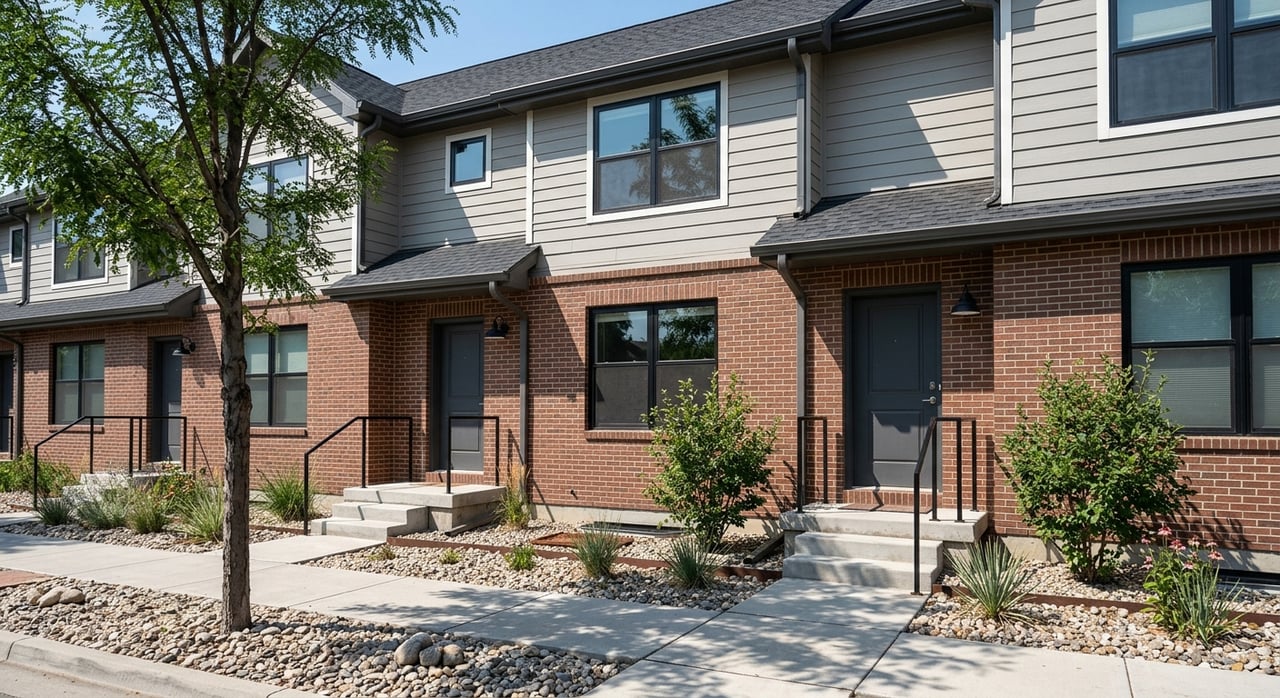
Boulder is not made up of just one housing type. Detached single-family homes still cover much of the low-density landscape, but the city also has condos, townhomes, and other attached housing options. In the most walkable and transit-rich areas, you will often see more attached housing and, in many cases, higher prices.
The Boulder Valley Comprehensive Plan survey also shows public interest in housing options such as duplexes, townhouses, and cottage courts. So while detached homes remain a major part of the city, the broader housing conversation clearly includes a wider mix of home types.
Affordable and middle-income pathways
Boulder also has city-supported homeownership programs that matter for buyers trying to understand possible entry points. The city says permanently affordable homes are sold below market rate to income-eligible, owner-occupant buyers. Some middle-income program homes are generally priced around $275,000 to $375,000.
The city also offers H2O down payment assistance loans of up to $100,000 for market-rate purchases. For some buyers, these programs can create more realistic paths into ownership. They also show that Boulder’s housing story is not only about top-of-market pricing.
What surprises people about living in Boulder
One common surprise is that Boulder feels both active and practical. Yes, the scenery and trail access stand out, but daily life often comes down to smaller things like being able to bike to errands, hop on a bus, or spend a Saturday at the farmers market.
Another surprise is how much the student population shapes the city without defining every part of it. With CU Boulder students making up about 31% of the population, there is real energy tied to the university. At the same time, Boulder also functions as a year-round home base for professionals, renters, owners, and people who want strong access to both urban amenities and open space.
Is Boulder a good fit for you?
Boulder can be a great fit if you want outdoor access built into your routine, a city with strong biking and transit options, and a social calendar that stays active through the year. It also helps if you are comfortable with a competitive and expensive housing market, especially in the most central and connected areas.
If you are deciding whether Boulder matches your lifestyle and budget, the most helpful next step is to compare neighborhoods, home types, and commute patterns based on how you actually want to live. If you want guidance on buying or selling along the Front Range, Front Range Collective is here to help you move with clarity and confidence.
FAQs
What is year-round living in Boulder like?
- Year-round living in Boulder usually means a mix of outdoor routines, active commercial districts, seasonal community events, and flexible transportation options that include driving, biking, and transit.
Does winter living in Boulder feel limiting?
- No. Winter is real, but the city says streets and walking and biking paths are cleared, and winter hiking can still be enjoyable with the right gear.
Can you get around Boulder without driving every day?
- In many central areas, yes. Boulder has an extensive bikeway network, the HOP, local RTD service, and regional connections like the Flatiron Flyer.
Is Boulder housing expensive for homebuyers?
- Yes. Public market data in the research report places Boulder median sale prices in the high-$800,000s, and Census Reporter shows an owner-occupied median value above $1.1 million.
What kinds of homes are available in Boulder?
- Boulder includes detached single-family homes, condos, townhomes, and other attached housing options, with more attached housing often found in walkable and transit-rich areas.
Are there lower-cost homeownership options in Boulder?
- The city offers permanently affordable homeownership opportunities for income-eligible buyers, some middle-income program homes generally around $275,000 to $375,000, and H2O down payment assistance loans up to $100,000 for market-rate purchases.